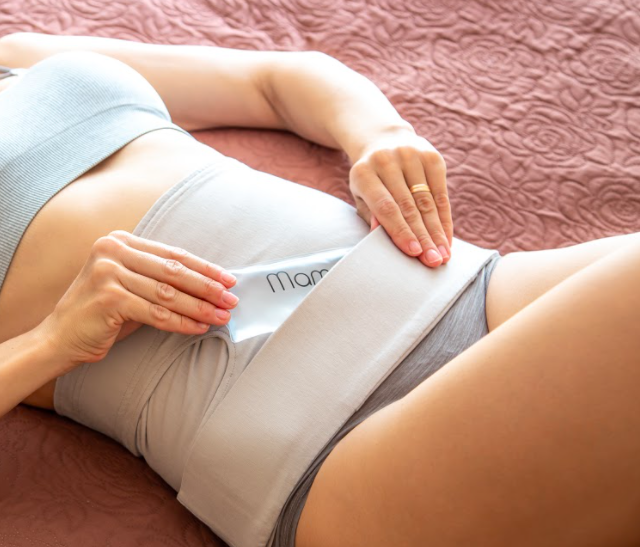



Belly wrap for pregnant women
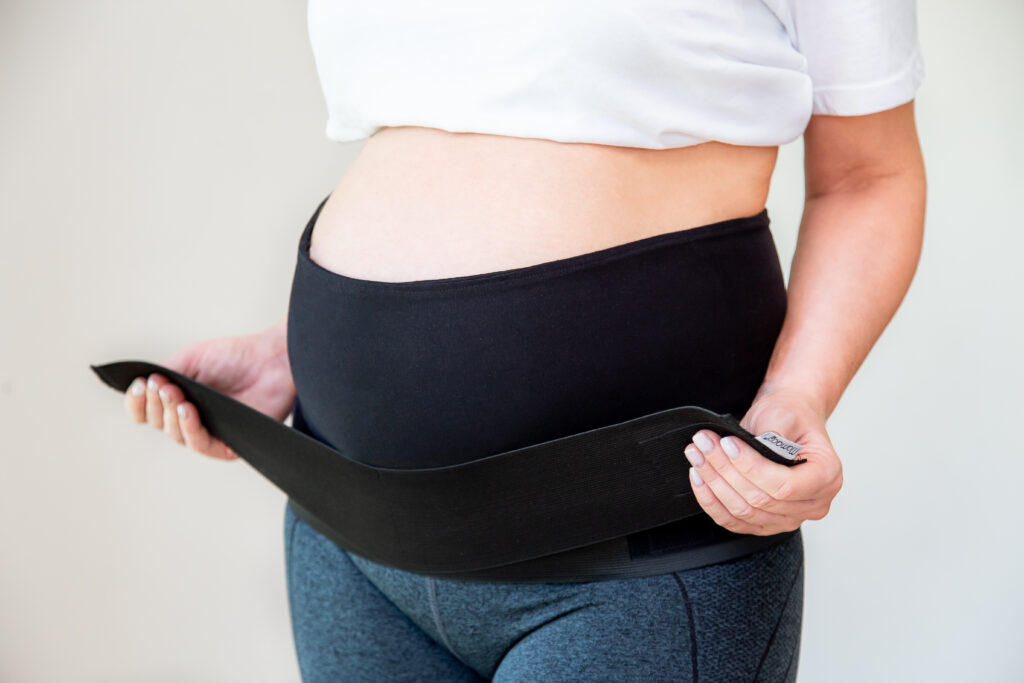
It is recommended to start using the support belt according to your own comfort level – when you feel the need for additional support for your abdomen and back while moving (usually around weeks 28–30 of pregnancy, when the belly begins to grow more rapidly). The belt “lifts” the abdomen, thereby reducing the load on the lower back and helping to decrease back tension and fatigue. Supporting the core improves body awareness and helps maintain a more upright posture, which in turn ensures more efficient breathing and better oxygen supply. The belt can also be used for the prevention of stretch marks. It can be worn until the end of pregnancy, as it is adjustable and “grows” together with the baby. Take the belt with you to the maternity hospital so that, if needed, you can start using it again immediately after childbirth.
In summary, it can be said that our belly wrap is a good helper during pregnancy for common skeletal muscle system pains (e.g. pain in the lower back, sacrum, symphysis and hip area) and helps to feel more comfortable during pregnancy.
When purchasing the support belt, you will receive a pregnancy exercise programme created by physiotherapist Kadri Kruusmägi. The exercises help ensure better overall wellbeing, and the same programme can also be continued during the first weeks after childbirth if you feel the need for gentle exercises.
Postpartum belly wrap
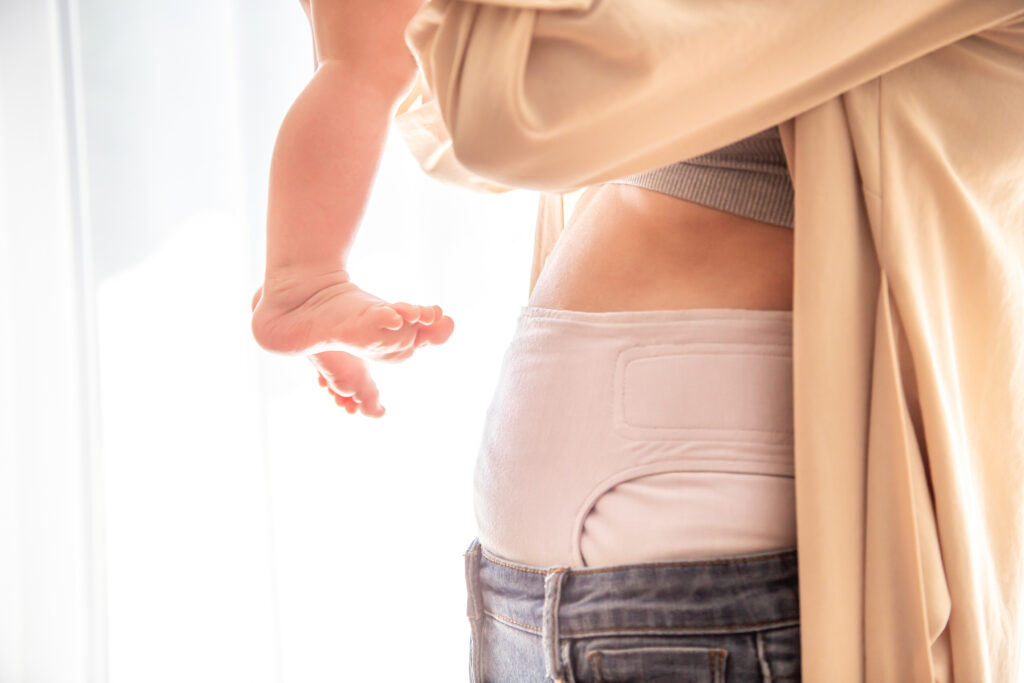
After giving birth, it is common to have a change in the sensation of the body and the sensation of the abdominal area. Abdominal muscles have been under extreme stretch for a long time, and a soft belly wrap provides them with just the right amount of support and compression.In the early recovery period, it is not wise to apply "get in shape quickly" solutions. It is recommended to avoid continuous holding in the stomach and waist trainer type corsets or clothing, which put excessive pressure on the middle part of the body and the pelvic floor and do not allow proper in and out breathing (slows down recovery). Prefer soft belly wraps or clothes with mild pressure.
The belly wrap protects and supports the postoperative sutures of a caesarean section. In addition to compression, a pleasantly cooling cold pack (included with the model with a gel pack) also provides a pain-relieving effect.
NB! Keisrilõikest taastumiseks saab Mamaco bandaaži osta Teresa Abivahendikeskusest riikliku soodustusega: arsti digiretsepti alusel tasub Tervisekassa 90% piirhinnast.
After childbirth, give yourself time to rest and adjust. The rapid recovery period usually lasts 6–8 weeks, during which you can wear the support belt, do gentle exercises (e.g., the Mamaco exercise programme), and go for stroller walks. After this period, it is recommended to have a routine check-up with a midwife or gynaecologist, and also to visit a women’s health / pelvic floor physiotherapist. Check with your hospital for available options. You can also explore the special e-physiotherapy programme PelWell, created by physiotherapist Kadri Kruusmägi, which supports women on their recovery journey.
Abdominal Surgery and Support Belt
Surgeons recommend wearing a support belt for 6–8 weeks after abdominoplasty or other abdominal surgeries, depending on the severity of the operation.
NB! Operatsioonist taastumiseks saab Mamaco bandaaži osta Teresa Abivahendikeskusest riikliku soodustusega: arsti digiretsepti alusel tasub Tervisekassa 90% piirhinnast.
In the same way, as in a caesarean section, our belly wraps support the sutures and exert light pressure on the middle part of the body in the form of compression, accelerating the movement of fluids and reducing pain and swelling. The wrap is made of soft material and adjustable; you can start wearing it 24 hours after the operation, but you should act according to how you feel. Be sure to familiarise yourself with the recommendations of the product manual.
After 6+ weeks post-surgery, you can begin consciously strengthening your body with physiotherapy (if no instructions were provided at discharge). Exercise supports your recovery in the best possible way. Physiotherapist Kadri Kruusmägi has created the e-physiotherapy programme PelWell, which includes exercises she also uses in her patients’ recovery programs.